AgriPoliS: when individual farm decisions reshape an agricultural region
A change in energy prices or agricultural policy does not affect every farm in the same way:
Some may invest in new technology. Others may expand, reduce production or leave agriculture altogether. As these
decisions accumulate, they can reshape production, land markets and the structure of an entire agricultural
region.
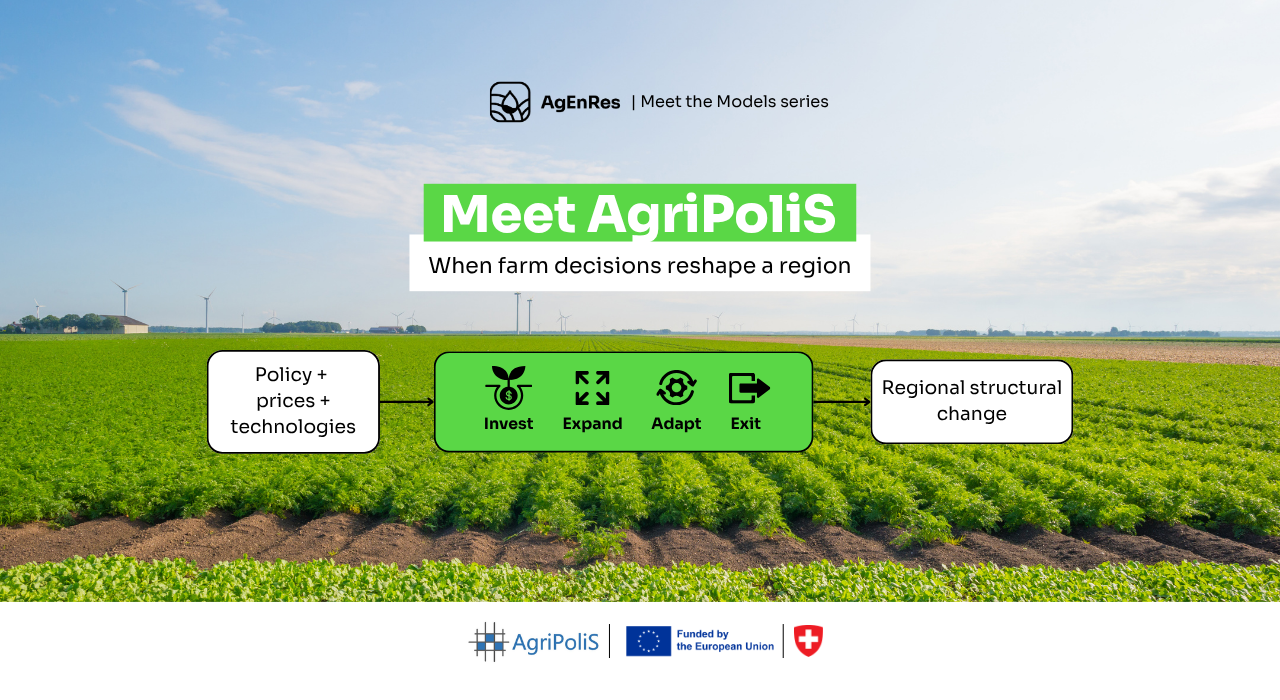
In AgEnRes, we are developing a toolbox to monitor and assess fossil-fuel use and energy-intensive inputs, including mineral fertilisers, across different scales. Our previous articles explored the wider energy-system and agricultural-market perspectives through OPENPROM and GLOBIOM, as well as the weight of the decisions at individual farm level through FarmDyn. Today we will be focusing on AgriPoliS, which shows how the interaction of many different farms can reshape an agricultural region over time.
AgriPoliS, short for Agricultural Policy Simulator, is a spatially explicit, dynamic agent-based model that helps us analyse agricultural structural change. In it, each farm is represented as an individual “agent” that makes annual decisions about:
- what to produce;
- whether to invest;
- whether to rent additional land;
- whether to adopt a new technology; and
- whether to continue farming or exit the sector.
This way, we can observe how corporate farms seek to optimise profit, while family farms prioritise household income; and since farms interact through shared land market, we can also see how one farm’s decision can affect the opportunities available to others.
Following this logic, AgriPoliS does not impose sizes or type distributions of future farms when formulating its scenarios. Instead, these patterns emerge from the decisions and interactions simulated within the model.
This is more important than one might think at first glance. Let’s take, for example, a scenario where a new energy-saving technology that seems economically attractive for an individual farm is developed. AgriPoliS helps us represent how adoption does not happen in isolation, and if some farms become more competitive after adopting such technology, they may:
- bid for more land;
- expand production;
- increase investment;
- compete more effectively with neighbouring farms; or
- contribute to structural changes that affect the wider region.
This, in time, can mean that other farms may not be able to make the same investment because of their size, specialisation, income or access to resources. AgriPoliS helps us examine these differences by representing farms as heterogeneous decisionmakers rather than assuming that all farms respond in the same way.
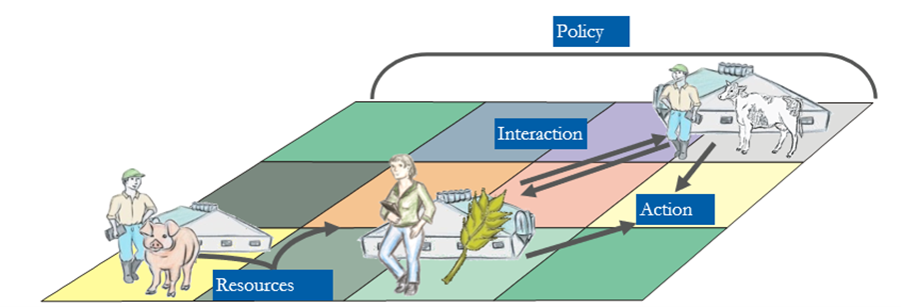
Image 1: Visual representation of farms’ regional context and interactions
What goes into AgriPoliS?
AgriPoliS is calibrated using empirical farm-level and regional data, including data from sources such as FADN/FSDN and regional statistics. It can be parameterised for specific case-study regions and, within AgEnRes, the principal inputs include:
- farm-level data for the selected region;
- policy parameters, such as direct payments and investment subsidies;
- agricultural price and market signals from GLOBIOM; and
- technology costs and performance parameters from FarmDyn.
This allows the model to combine realistic farm structures with external policy, market and technology scenarios.
What comes out?
Based on this input, AgriPoliS simulates how the agricultural region develops over time, including:
- the number of farms remaining in the region;
- farm-size distribution;
- which farm types grow, shrink or exit;
- land rental prices;
- land-use structure;
- technology adoption rates by farm type; and
- farm income and profitability indicators.
These results can tell us not only whether a policy or technology has an effect, but also how that effect is distributed across different farms.
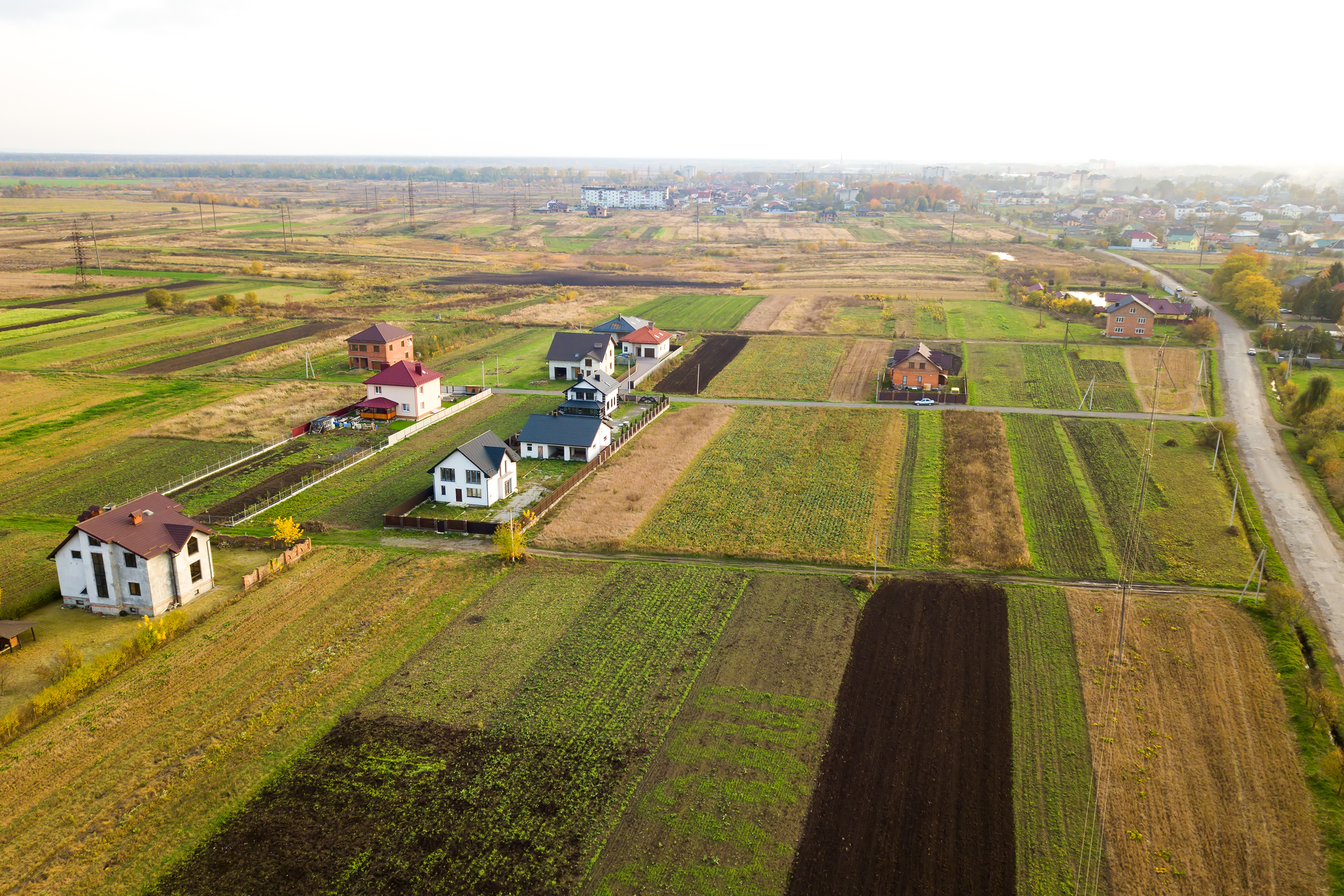
Image 2: Homes among fields in rural area by Bilano
Thanks to these outputs, we can explore how structural adjustment unfold across different farm types over a period of up to 25 years. AgriPoliS can then provide evidence on:
- farm classes and specialisation;
- management intensity;
- farm-size changes;
- area and production-share changes;
- adoption potential; and
- regional structural pathways.
This evidence can help inform the adoption constraints, management-system mapping and structural-change assumptions used in broader sector-level scenarios.
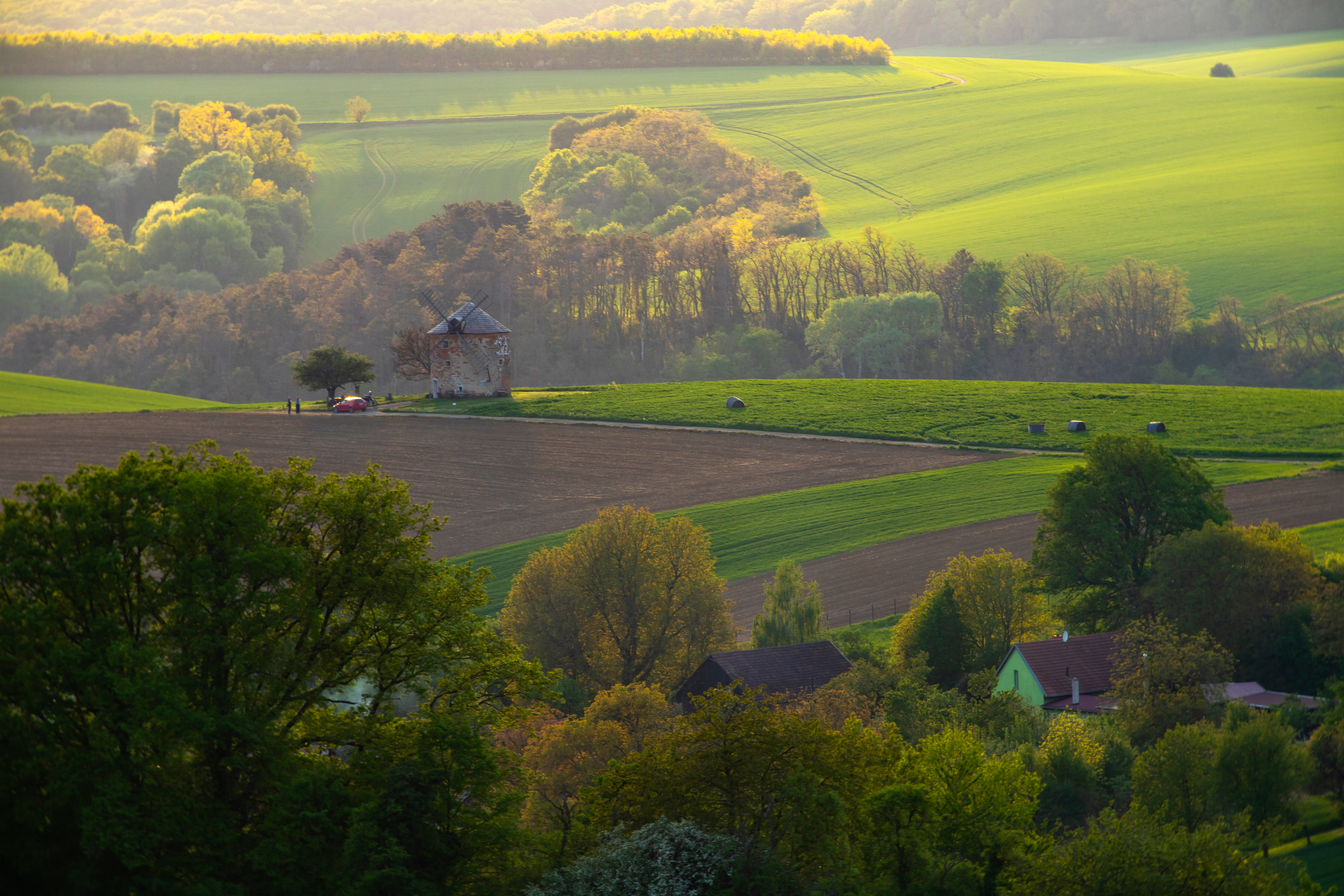
Image 3: Rural landscape in South Moravia, Czech Republic by Erik8213
In AgEnRes, AgriPoliS is being used to simulate how farms in three case-study regions in the Netherlands, Germany and Poland may respond to energy-price shocks and policy interventions. One key scenario considers the combined effects of progressively reducing direct payments; and introducing investment subsidies for energy-efficient technologies.
The model does not simply count potential adopters, but it explores what happens when hundreds of farms make decisions under shared market and resource constraints. This can help us explore questions like:
- How might changes to direct payments or investment subsidies affect which farms survive, grow or exit?
- Which farm types are most likely to adopt energy-saving technologies, and which may risk falling behind?
- How could energy-price and policy scenarios change farm numbers, farm sizes and regional land distribution?
These questions matter because the agricultural energy transition may create uneven opportunities: A policy that supports investment could accelerate technology uptake while also reinforcing structural differences between farms.
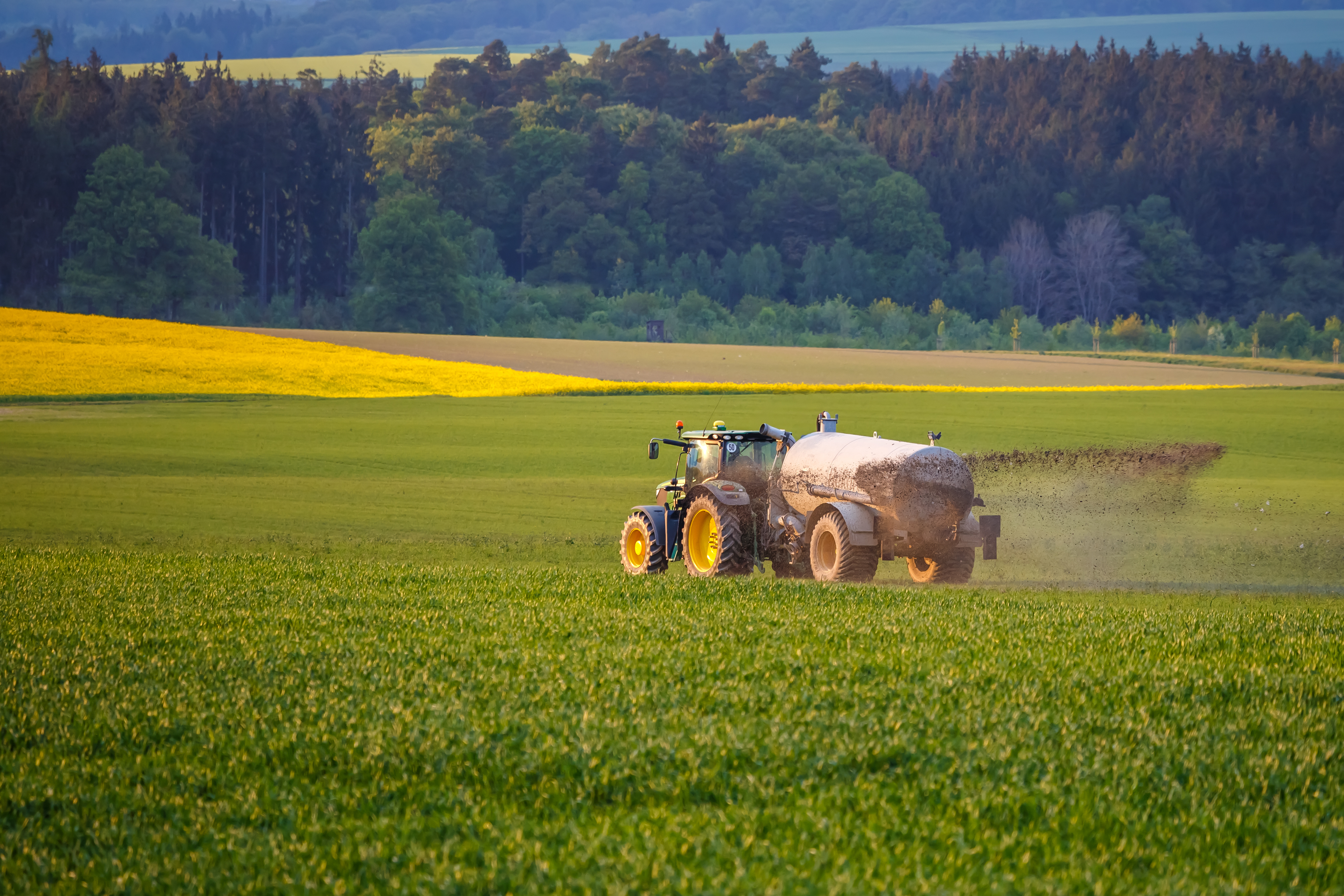
Image 4: Tractor spreading fertiliser across verdant field by wirestock
Modelling through gaming?
Agent-based models can be difficult to explain through equations and architecture diagrams alone, but one thing that AgriPoliS has going for it, is that it has its own videogame:
FarmAgriPoliS, is an openly available game version of AgriPoliS, that provides a more interactive way to understand the model’s basic logic. In the game, the player manages one farm while computer agents make decisions for all the other farms in the simulated region. The player chooses a scenario and farm type, reviews political and price developments, examines the regional landscape, and makes decisions about land, machinery, investment and continued participation in farming.
The land market illustrates the model’s interactive character particularly well. Players submit bids for available land, but whether they receive it depends on competing decisions across the region. Farm development is therefore affected not only by the player’s choices, but also by the behaviour of neighbouring farms.
*FarmAgriPoliS is not a replacement for the main research model. It is a practical entry point for exploring the mechanisms behind it.
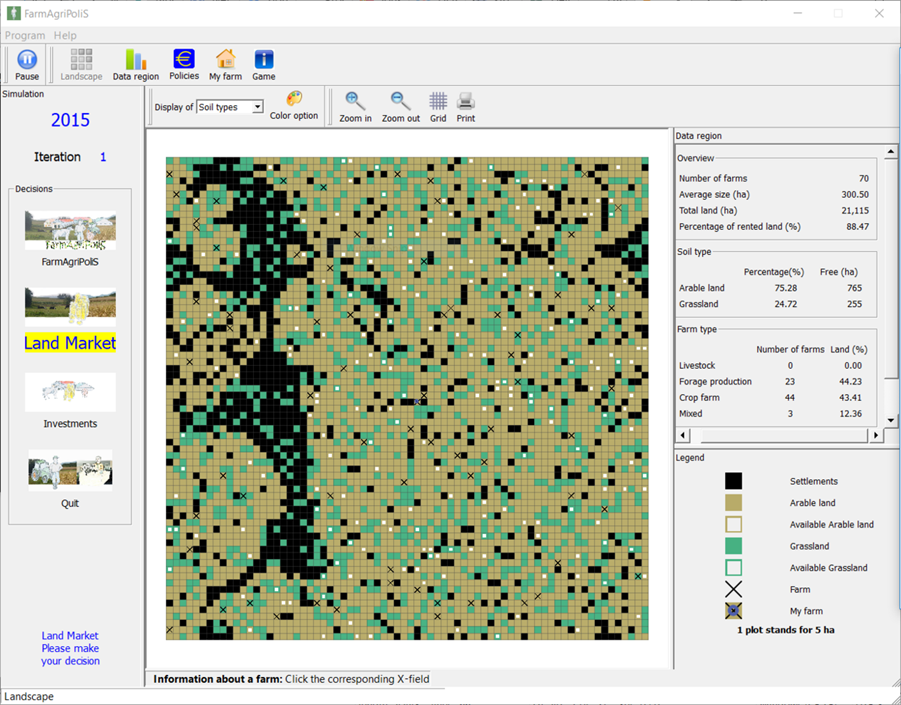
Image 5: Screenshot from FarmAgriPoliS
Talking about models can be complex and tiring, but if you can remember only three words (technically, four) about AgriPoliS, those should be:
- Heterogeneity: Farms differ in size, production system, resources and investment capacity;
- Interaction: Farms compete through shared land and product markets; and
- (Path) dependency: Investments, exits and land-market outcomes in one year affect the choices available in subsequent years.
These are the characteristics that allow AgriPoliS to explore not only average responses, but the evolving distribution of gains, constraints and opportunities across an agricultural region. As the project team puts it:
“Understanding the energy transition in agriculture requires the multiple lenses provided by our AgEnRes model toolbox. AgriPoliS contributes the spatial and dynamic one: how farms across a region adjust, or fail to, over time, and what that means for the structure that remains.”
AgriPoliS helps us bridge the space between an individual farm decision and a European agricultural scenario, asking what happens after a technology or policy enters a region:
-
Who adopts?
- Who expands?
- Who cannot adapt?
- How does land move between farms?
- What agricultural structure remains after 10, 15 or 25 years?
That regional perspective is essential for designing energy-transition policies that consider not only aggregate uptake, but also the diversity and long-term development of European farming.